Numerous San Francisco elected officials ratcheted up the pressure for a potential takeover of Pacific Gas & Electric’s transmission grid in The City this week, reflecting deep discontent with the utility after recent outages that at one point in December left 130,000 people without power.
“We are done, and it is time for San Francisco to break up with PG&E,” state Sen. Scott Wiener said Monday on the steps of City Hall, where he was flanked by Board of Supervisors President Rafael Mandelman and Supervisors Matt Dorsey, Bilal Mahmood and Danny Sauter.
Wiener, a longtime PG&E critic who in 2020 unsuccessfully pushed legislation to turn the company into a public utility, was there to unveil state Senate Bill 875, a measure aimed at making it easier for cities to seek separation from private utilities through the California Public Utilities Commission…
…San Francisco already provides more than 75% of the electricity consumed in The City through its not-for-profit CleanPowerSF program and its hydroelectric Hetch Hetchy Power System… (more)
How will San Francisco ownership changer the fate of the people who own or want to invest in rooftop solar systems? Will the city rollback the anti-solar legislation that was put in place by the CPUC and supported by the state legislature?
View from a Treasure Island residence indicates the distance residents must travel to get to markets.
With no supermarket and limited transit, residents support each other with a community garden and food pantry
In 2003, Abdo Nasser and his family found themselves on Treasure Island on an uncharacteristically warm San Francisco day. There as tourists, Nasser and his family grew thirsty and searched for a grocery store. However, as they roamed, it became clear there were none.
My wife and I and the kids needed water — it was a hot day,” Nasser said in a recent interview. “There was no water, no snacks, nothing.”
Treasure Island has long been a neighborhood without a retail ecosystem because of its isolation from services available in the rest of San Francisco. While a massive redevelopment project is underway, it has not translated to basics like supermarkets.
Nasser saw an opportunity and approached the Treasure Island Development Authority board of directors. He was told that no long-term lease would be available, since big real estate development projects on the island were imminent. It wasn’t until 2008, Nasser said, that he was given a 600-square-foot “shack” by the lone road connecting the island to the mainland via the Bay Bridge.
Nasser quickly learned that residents wanted and needed more. He moved to a 3,000-square-foot location in 2012 before finally setting up Treasure Island Cove’s current location in 2016. More than two decades after Nasser first searched for a grocery store site, his remains the only one on the island…
Food pantry doubles clientele
But for many residents, off-island food shopping is too burdensome or expensive. One Treasure Island runs a weekly food bank in coordination with the San Francisco-Marin Food Bank. Established more than 20 years ago, the partnership provides access to fresh produce and non-perishables, with limited amounts of eggs, milk, bread and meat, every Tuesday…
Garden, meet farm
According to Treasure Island Development Authority’s president, V. Fei Tsen, an urban farm was always part of the original Treasure Island master plan.
The plan allocates 13 acres in the center of Treasure Island for farming. Originally the plan set aside 25 acres, but part of that was turned over for a training facility for Bay FC, as well as a potential site for a job training program, Allison Albericci, the development authority’s major sites principal planner, said at a November agency meeting...(more)
Our February 17 zoom panel discussion will be on street trees. Mayor Lurie and Supervisor Wong have proposed legislative amendments that will harm San Francisco’s already small urban tree canopy. If this passes it allows developers to choose between planting trees and paying an (inadequate) in lieu fee which means fewer trees will get planted. It will eliminate the public’s right to appeal tree removal.
Our panelists so far are Josh Klipp, an accessibility consultant and Dave Osgood who is fighting to save trees in his neighborhood. I’ll update the website as more panelists are confirmed.
If your organization hasn’t paid dues for 2026 yet you now have the option of paying by zelle using our email address – treasurer@csfn.net or mail a check made out to CSFN to Greg Scott 637 Noe Street, SF CA 94114
We love to hear from you! Please email me at president@csfn.net or bridgelady@earthlink.net and let me know when and where your neighborhood organization is meeting. I want to keep attending as many meetings as possible and continue learning about the issues in our city neighborhoods.
By Keep Crocker Real released files this week. A lot is at stake. We need to hear your voices. Thursday, February 19, at 10:00am, City Hall, room 416. It’s item 9 on the agenda:
SYNTHETIC TURF PROGRAM – POLICY AND PROTOCOLS You can documents on our website: keepcrockerreal.com/files
While you still can consider visiting Hummingbird Farm on February 22, from 11:00am to 2:00pm. where we will hang artwork from our If Nature Could Talk event on the 100+ trees Rec & Park intends to cut down. (We won’t damage the trees.) This is a great way to pay tribute to the historic trees and wildlife that will no longer be around if the “renovation” plan goes through unchanged.
If you want to learn more about the harms of plastic, author Judith Enck’s is giving a talk at the Commonwealth Club titled, The Problem with Plastic on Thursday, February 19 at 5:30pm.
This fight for a better neighborhood park isn’t over yet. We look forward to meeting and working with you soon. keepcrockerreal.com
Calmatters has a number of articles on various attempts made by state legislators to stop the installation of Astroturf. If any of these legislators are still in office, one might contact them to find out how you may help them bring the matter forward again.
Key Legislative Actions and Trends
California SB 676 (2023): Signed into law, this allows cities and counties to restrict or ban the installation of artificial turf on residential properties. It effectively reverses a 2015 law that had prohibited local governments from doing so to encourage water-wise landscaping. This is why Rec and Park is holding hearings on the matter now.
California AB 1423 (2023): Proposed legislation that aims to ban the manufacturing and sale of artificial turf containing PFAS (per- and polyfluoroalkyl substances).
Colorado SB24-081 (2024): Prohibits the installation of artificial turf containing intentionally added PFAS on state property starting January 1, 2026.
Local Bans:Certain municipalities, such as Boston, have implemented prohibitions on installing new artificial turf in city parks.
Environmental and Health Concerns Driving Legislation
Chemical Exposure: Studies have found PFAS, lead, and BPA in artificial turf materials, which can leach into the environment and be ingested or absorbed by users.
Microplastics: Turf breaks down into microplastics that wash into water sources.
There is a bit of a disconnect between theory and results with the Wiener bills. Art by sfbluecomics.
Commentary: How long can you hold a citizenry hostage to a crisis?
Mass confusion over the meaning and implementation of SB79, which amounts to unlimited growth near mass transit, is sweeping California’s largest cities that are targeted by the one of the most draconian bills ever devised. After turning over the Pacific coastline to developers, and blaming cities for the housing shortage, Senator Wiener, has managed to make almost everyone mad at him. Now it turns out his penchant for writing long, detailed, prescriptive bills is not playing well with the public or city officials who are charged with enforcing what has been described as developer wet dreams.
Give the anger and confusion over SB79 in his district is giving Scott Wiener’s competitors a boost. He is rumored to be considering a delay in implementation of the bill as he seeks support for his new power move to Washington to replace Pelosi.
In his haste to divide and conquer Wiener has succeeded in dividing both his friends and foes, often referred to as YIMBYS and NIMBYS. Wiener is not enjoying a lot of support from the press either. He relies heavily on the Abundant crowd in Silicon Valley, that his constituents are being hammered by. If you were not recently laid off by a high tech firm, you may have lost your income to Waymo or been evicted from a gentrified neighborhood.
Wiener is fighting a Dead horse that is obvious to everyone but him and people are ready to fight back.
There are some gems in this article that covers a lot of the history of how we got here and where the Wiener of the world want us to go. Here are a couple of pull-quotes from the article:
On late Friday, workers were given ‘redeployment assignments’ to ‘Staff Centers’ opened because of Monday’s school closures. They’re confused.
On the cusp of Monday’s planned San Francisco teacher work stoppage, teachers were jolted to receive emails from the district telling them they had work to do.
On Friday evening, the San Francisco Unified School District emailed its 6,000-plus teachers, providing them information that they already knew — schools are closed Mondaydue to the overwhelming possibility of the first San Francisco teacher walkout in 47 years. The email informed teachers — who voted at a 97.6 percent clip to authorize Monday’s walkout — that they were receiving “redeployment assignments” to “Staff Centers” on Monday.
“In order to maintain District operations, we are opening Staff Centers where SFUSD employees should report to work,” the email states. “Staff are expected to work and report to their assigned Staff Center.” … (more)
Alex Shepard, is a former assistant U.S. attorney who has a history of busting major corruption cases, started this month as the city’s inspector general, where she’ll investigate fraud, waste, and abuse in the $16 billion budget. She is well known investigating big corruption cases in San Francisco. She establishing a new whistleblower portal and invites the people to report problems they see anonymously.
Shepard’s new role was created through passage of Prop C in 2024.
Power Play asked about the powers she wields and how she intends to use them. “There’s subpoena power available to the controller’s office, but Prop. C extended it to include not just people in the city [and] records but anyone who has a contract with the city or a grant agreement. And I have search-warrant power, which, as a former prosecutor, I’m really familiar with. I view the IG as kind of a force multiplier. I don’t have a lane. I can really look at anything.”
There are two kinds of cases she wants to pursue:
1. She wants to take up big cases which may have an outsize deterrent value, such as the Mohammed Nuru case,
2. She also wants to look into waste in government spending.
Alex Shepard’s message to potential whistleblowers is that they can now report to an anonymous portal without fear of retribution.
If you see something wrong, you should report it to the whistleblower portal. Alex is aware that people see things and are pressured into joining in on activities they know are wrong to keep their jobs. They should no longer feel threatened because now they can report anonymously on what they observe that they feel need to be investigated. Sunshine requests may be helpful to get the ball rolling as well.
San Francisco in 2026 faces an electoral blizzard. Its first contested congressional race since 1987, two tight June supervisor races on top of the November contests, and at least three high-profile ballot measures. San Franciscans will also be involved in the governor’s race and helping Democrats take back the House and Senate.
For campaign professionals, hardworking volunteers, and political junkies, 2026 should be a great year.
Here’s our early forecast of the key San Francisco races along with the governor’s contest…
Charter Reform
It has yet to be decided what the planned charter reform ballot measure will cover and whether it will be on the June or November ballot (or both). Here’s what I previously wrote about all those claiming that San Francisco’s biggest problem is its charter:
Charter reform will not close open-air drug markets. It will not fill downtown office vacancies. It will not solve MUNI’s financial troubles. It will not lower health care or housing costs. It will not get lenders to make loans to build new housing. It will not boost the international tourism that Donald Trump has deterred. Charter reform will make San Francisco government operate more effectively. But it will not address the top ten problems facing the city.
I hope you will read this entire article. It is somewhat surprising coming from Randy Shaw, but, rather close to what many of us believe may turn the city political arena back into balance. Or closer to balance than it is now. A healthy middle is what the public seems to want but has problems figure out who to trust to get them there.
Randy is correct in pointing out the one of the biggest problems we are current dealing with is government overreach. Both the national and the state administrations have usurped a lot of the power the citizens welded.
How does the public regain its power? Which candidates are most likely to reverse the trend to centralize authority? Who is most likely to find the solutions to San Francisco’s real problems?
By Madeline Medina : sfgate – excerpt (audio) CVS Pharmacy plans to close another one of its San Francisco locations next month. CVS Pharmacy plans to shutter one of its San Francisco locations next month, further shrinking its presence in a city already grappling with widespread pharmacy closures. The store at 701 Van Ness Ave. is slated to close on Feb. 24, the company said in a statement shared with SFGATE, leaving just eight CVS stores in San Francisco. Patient prescriptions will be transferred to the pharmacy located at 1059 Hyde St., which is about 1 mile away from the Van Ness location. Employees at the closing location are also being offered “comparable roles within the company,” CVS said in its statement. CVS did not cite an exact reason for the closure, but the company said some of the factors it considers are “market dynamics, population shifts and a community’s store density.”
The closure comes as San Francisco has been facing a worsening pharmacy shortage in recent years, affecting major chains like Walgreens and CVS alongside longtime neighborhood pharmacies…(more)
Time is of the essence, say friends and family of retired firefighter with Stage 4 cancer
Retired San Francisco firefighter Ken Jones was diagnosed with cancer last March. On Jan. 7, his insurance provider, Blue Shield of California, refused to pay for his treatment, his family said.
“Blue Shield has decided that my father’s life is not worth paying for,” Jones’ daughter Rachel said at a meeting of the San Francisco Health Service Board Thursday afternoon.
In the 17 years Jones worked at the fire department, his daughter said Jones never asked if saving lives was too expensive.
The city is responsible for negotiating its public servants’ health-insurance contracts, and the Health Service Board oversees that relationship. Jones’ family and other retired firefighters were there to ask the board to override Blue Shield’s denial…
Jones was at a clinic preparing to begin a round of chemotherapy on Wednesday when the family learned that Blue Shield was refusing to pay. Her husband’s doctor was “shocked,” Horvath added… (more)
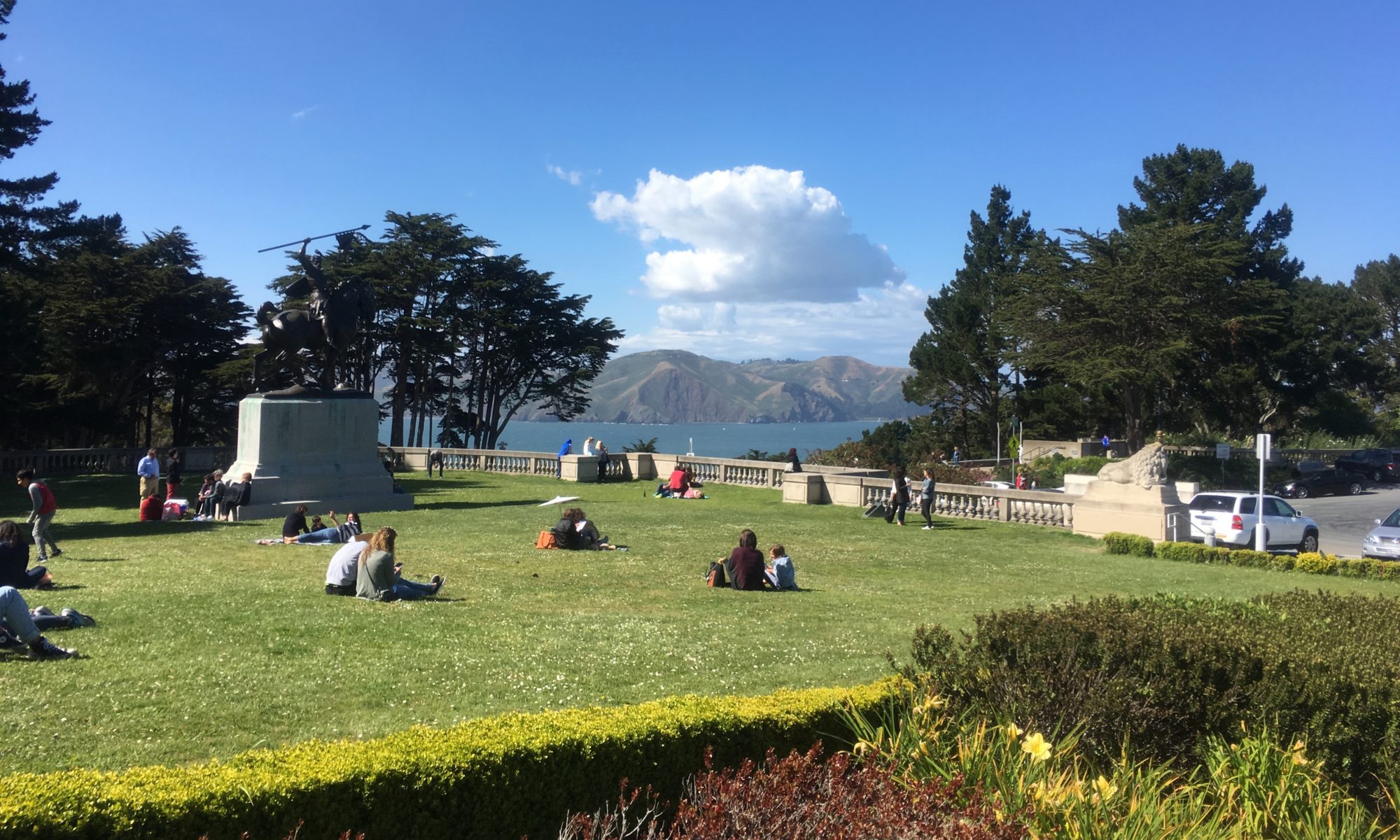

 By Keep Crocker Real released files this week.


