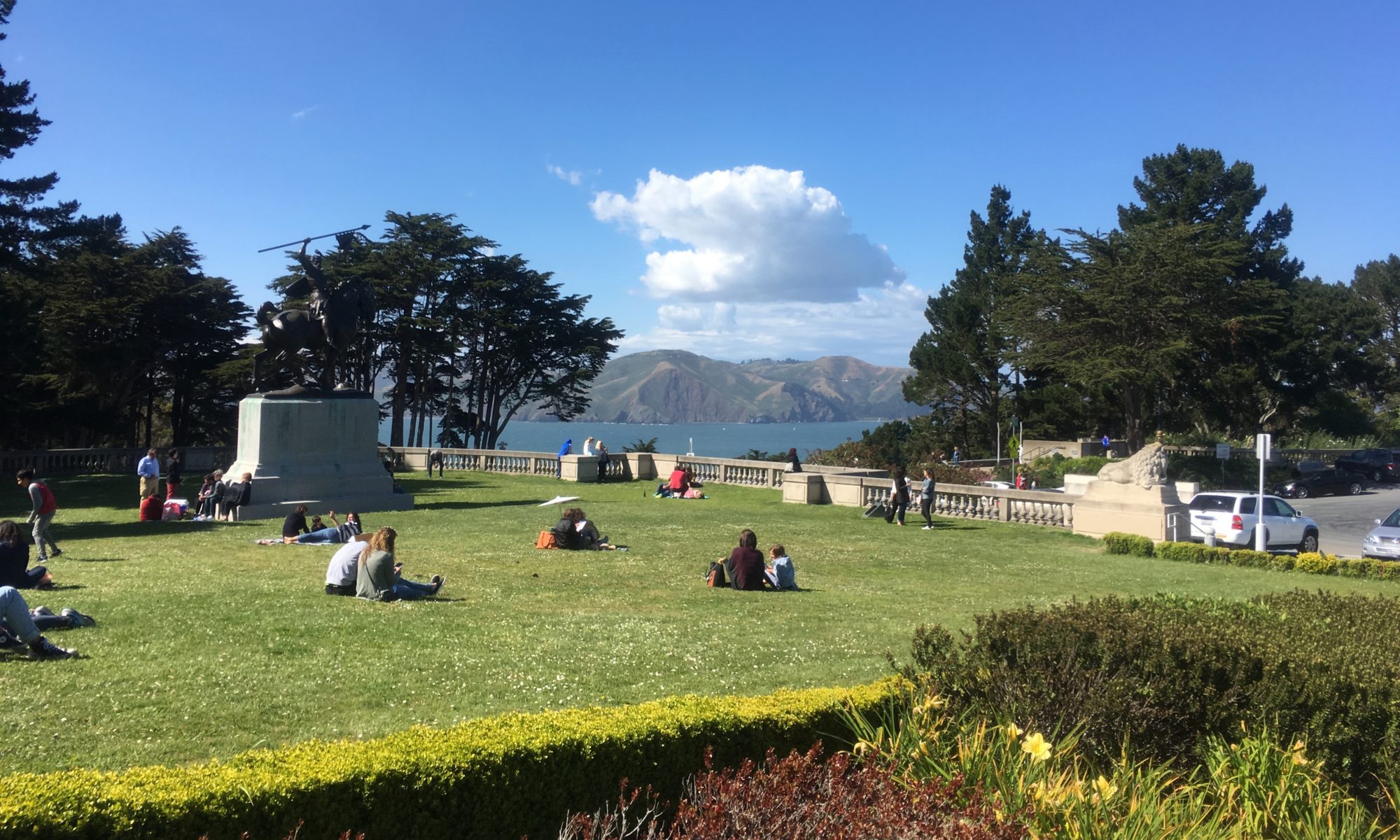
Keep Crocker Real


By Keep Crocker Real released files this week. A lot is at stake. We need to hear your voices. Thursday, February 19, at 10:00am, City Hall, room 416. It’s item 9 on the agenda:


SYNTHETIC TURF PROGRAM – POLICY AND PROTOCOLS
You can documents on our website: keepcrockerreal.com/files

While you still can consider visiting Hummingbird Farm on February 22, from 11:00am to 2:00pm. where we will hang artwork from our If Nature Could Talk event on the 100+ trees Rec & Park intends to cut down. (We won’t damage the trees.) This is a great way to pay tribute to the historic trees and wildlife that will no longer be around if the “renovation” plan goes through unchanged.

If you want to learn more about the harms of plastic, author Judith Enck’s is giving a talk at the Commonwealth Club titled, The Problem with Plastic on Thursday, February 19 at 5:30pm.

This fight for a better neighborhood park isn’t over yet. We look forward to meeting and working with you soon. keepcrockerreal.com

Calmatters has a number of articles on various attempts made by state legislators to stop the installation of Astroturf. If any of these legislators are still in office, one might contact them to find out how you may help them bring the matter forward again.

Key  Legislative Actions and Trends

  • California SB 676 (2023): Signed into law, this allows cities and counties to restrict or ban the installation of artificial turf on residential properties. It effectively reverses a 2015 law that had prohibited local governments from doing so to encourage water-wise landscaping. This is why Rec and Park is holding hearings on the matter now.
  • California AB 1423 (2023): Proposed legislation that aims to ban the manufacturing and sale of artificial turf containing PFAS (per- and polyfluoroalkyl substances).
  • Colorado SB24-081 (2024): Prohibits the installation of artificial turf containing intentionally added PFAS on state property starting January 1, 2026.
  • Local Bans: Certain municipalities, such as Boston, have implemented prohibitions on installing new artificial turf in city parks.

Environmental and Health Concerns Driving Legislation

  • Chemical Exposure: Studies have found PFAS, lead, and BPA in artificial turf materials, which can leach into the environment and be ingested or absorbed by users.
  • Microplastics: Turf breaks down into microplastics that wash into water sources.
  • Environmental Impact: Artificial turf creates “heat islands,” reduces biodiversity, and prevents soil aeration

California’s blockbuster legislation faces rocky rollout

By Sam Dillon : msn – excerpt

https://www.msn.com/en-us/news/us/californias-blockbuster-housing-legislation-faces-rocky-rollout/ar-AA1W4Md0?ocid=socialshare

There is a bit of a disconnect between theory and results with the Wiener bills. Art by sfbluecomics.

Mass confusion over the meaning and implementation of SB79, which amounts to unlimited growth near mass transit, is sweeping California’s largest cities that are targeted by the one of the most draconian bills ever devised. After turning over the Pacific coastline to developers, and blaming cities for the housing shortage, Senator Wiener, has managed to make almost everyone mad at him. Now it turns out his penchant for writing long, detailed, prescriptive bills is not playing well with the public or city officials who are charged with enforcing what has been described as developer wet dreams.

In his haste to divide and conquer Wiener has succeeded in dividing both his friends and foes, often referred to as YIMBYS and NIMBYS. Wiener is not enjoying a lot of support from the press either. He relies heavily on the Abundant crowd in Silicon Valley, that his constituents are being hammered by. If you were not recently laid off by a high tech firm, you may have lost your income to Waymo or been evicted from a gentrified neighborhood.

Wiener is fighting a Dead horse that is obvious to everyone but him and people are ready to fight back.

There are some gems in this article that covers a lot of the history of how we got here and where the Wiener of the world want us to go. Here are a couple of pull-quotes from the article:

Teachers, others shocked to get SFUSD ‘assignments’ for strike day

By Joe Eskenazi : missionlocal – excerpt

On late Friday, workers were given ‘redeployment assignments’ to ‘Staff Centers’ opened because of Monday’s school closures. They’re confused.

On the cusp of Monday’s planned San Francisco teacher work stoppage, teachers were jolted to receive emails from the district telling them they had work to do.

On Friday evening, the San Francisco Unified School District emailed its 6,000-plus teachers, providing them information that they already knew — schools are closed Mondaydue to the overwhelming possibility of the first San Francisco teacher walkout in 47 years. The email informed teachers — who voted at a 97.6 percent clip to authorize Monday’s walkout — that they were receiving “redeployment assignments” to “Staff Centers” on Monday.

“In order to maintain District operations, we are opening Staff Centers where SFUSD employees should report to work,” the email states. “Staff are expected to work and report to their assigned Staff Center.” … (more)

S.F. housing is hottest topic in first debate between District 2 supervisor candidates

by IO YEH GILMAN : missionlocal – excerpt

In the first debate between the two candidates for San Francisco District 2 supervisor on Tuesday evening, housing was the most contentious topic.

Though candidates Stephen Sherrill and Lori Brooke also spent large parts of the debate talking about cars and public safety, their answers on housing drew the most audible response from the crowd of about 200 people gathered at Convent & Stuart Hall, who leaned older and whiter…

Brooke, a longtime neighborhood organizer, criticized the city’s recent upzoning plan, which allows taller, denser housing in the city’s north and west, including on commercial corridors like Lombard and Chestnut streets in District 2…

Neighborhoods United SF, which Brooke co-founded, is part of a coalition currently suing the city to block the upzoning plan.

Sherrill, who was appointed District 2 supervisor by outgoing Mayor London Breed in December 2024, voted for the plan. But at the debate, as he has previously, he distanced himself from it, pointing out that the upzoning was mandated by the state.

If he hadn’t voted for it, he said, the state would have taken over San Francisco’s ability to approve new housing, essentially allowing buildings of any height to be built anywhere…

Brooke pushed back on Sherrill, saying that state takeover wasn’t the “real issue.” That, she said, is YIMBY state laws — the ones that required upzoning and allowed a 25-story buildingto be proposed on the current site of the Marina Safeway right by the waterfront.

This did not let Sherrill off the hook. “My opponent says he doesn’t like [the Marina Safeway development], which is good, but he is endorsed by the very senator and the YIMBY organizations that wrote and championed the laws that made it possible,” Brooke said.

Unlike Sherrill, she said, she would push back strongly against Sacramento.

Sherrill, for his part, said, “I absolutely urge our state representatives to reform some of these laws.”…

Other questions focused on street safety and drugs.

Both Sherrill and Brooke said they think drug dealers with prior convictions should serve mandatory jail time. (“Thank you,” said Moriarty.) Both also agreed that fully staffing the police department was a high priority…

Another big topic: Transportation. Both candidates agreed that Market Street should be reopened to cars (a few people booed, then some cheered). They also both agreed that new housing developments should include more parking.

The city should not prioritize any “single mode” of transportation and should give “appropriate” weight to other forms of transportation, Brooke said, pointing to frustrations over traffic and parking. The city’s “transportation decisions,” she said, have become “less about neighborhood actual function and more about transit ideology.”… (more)

I love the way the media keeps harping on some districts for building less new housing than other districts. There is a good reason for this. Some districts are already built out, and some districts have a large amount of open space or old industrial uses that can easily to converted into new neighborhoods. There is also a different in seismic stress that we saw during the Loma Prieta earthquake. The Marina had heavy damage. Is this the place to build a 25 story housing project?


New Bombshell story from NY Post:   Ex-San Francisco mayor appointed Bloomberg pal to key seat in hopes of landing a job. People ask, is that legal or is that a bribe? Could this effect the election?


Supes approve affordable senior housing project—but discussion raises larger issue

By Tim Redmond : 48hills – excerpt

Nonprofit housers are good neighbors. Speculators are not. But Wiener’s law treats both the same way.

To the surprise of nobody, the Board of Supes Tuesday rejected an attempt to delay or undermine an affordable housing project for seniors at the foot of Bernal Hill. The vote was unanimous.

A few neighbors on Coleridge street complained that the project would reduce the size of an existing park that has been closed for years and was hardly ever used when it was open. It’s a private park, not a city park, and it sits on top of a pedestal with a garage underneath, which makes it unstable anyway.

The project would include a new park that would be much more accessible…

Sup. Jackie Fielder, who supported the affordable senior housing, asked Planning Department staffer Audrey Maloney a pretty basic question. Under current state law, where are people supposed to go to raise questions about a new development in their neighborhood?

Maloney: Under SB 35 (a bill by state Sen. Scott Wiener), the city has no role in this project. The public has no right to a hearing. If it’s compliant with the local zoning, there’s nowhere to raise any questions. It’s approved by right…(more)

I’m going to add one other issue that comes to mind where handing out entitlements to developers is concerned. Not all of the projects are being built as planned. Quite a few change hands and the plans may be altered without any notice.  That is of great concern to the neighbors, and everyone concerned. Thousands of units are on hold. We have no idea what the developers will finally do once they decide to build, if they ever do.

As we all know, and Tim Redmond points out, “But SB 35, and its unholy progeny SB 423, doesn’t just apply to affordable housing projects. It also applies to a huge number of potential market-rate projects in much of San Francisco.” 

We don’t need for the state to declare we are under builder’s remedy because we failed to meet the RHNA goals. We already are.


Alex Shepard is the new San Francisco Inspector General

Information via email from SF Standard — G.G.

Anonymous whistleblowers wanted

Alex Shepard, is a former assistant U.S. attorney who has a history of busting major corruption cases, started this month as the city’s inspector general, where she’ll investigate fraud, waste, and abuse in the $16 billion budget. She is well known investigating big corruption cases in San Francisco. She establishing a new whistleblower portal and invites the people to report problems they see anonymously.

Shepard’s new role was created through passage of Prop C in 2024.

Power Play asked about the powers she wields and how she intends to use them. “There’s subpoena power available to the controller’s office, but Prop. C extended it to include not just people in the city [and] records but anyone who has a contract with the city or a grant agreement. And I have search-warrant power, which, as a former prosecutor, I’m really familiar with. I view the IG as kind of a force multiplier. I don’t have a lane. I can really look at anything.”

There are two kinds of cases she wants to pursue:
1. She wants to take up big cases which may have an outsize deterrent value, such as the Mohammed Nuru case,
2. She also wants to look into waste in government spending.

Alex Shepard’s message to potential whistleblowers is that they can now report to an anonymous portal without fear of retribution.
If you see something wrong, you should report it to the whistleblower portal. Alex is aware that people see things and are pressured into joining in on activities they know are wrong to keep their jobs. They should no longer feel threatened because now they can report anonymously on what they observe that they feel need to be investigated. Sunshine requests may be helpful to get the ball rolling as well.

President’s Message January 2026

by Deborah Murphy

A new year is upon us and CSFN will continue offering monthly panel discussions on important issues in San Francisco.

On Tuesday, January 20 at 6:30 pm PST we are hosting a Zoom panel discussion on AWSS – the auxiliary emergency firefighting water supply system, which desperately needs expansion to more neighborhoods. Our panelists will be SFFD Chief Dean Crispen, Assistant Deputy Chief Garreth Miller, John Crabtree, and Lisa Arjes. Pre-registration required!


CSFN holds monthly meetings to which all are welcome. Click the button below to see our full 2026 schedule.


We love to hear from you! Please email me at president@csfn.net or bridgelady@earthlink.net and let me know when and where your neighborhood organization is meeting. I want to keep attending as many meetings as possible and continue learning about the issues in our city neighborhoods.

Learn More About AWSS

Earthquake, Fire and Conflagration in San Francisco

by John Crabtree

This map shows the existing Auxiliary Water Supply System, which was never expanded to some 15 neighborhoods in the southern and western parts of the City. Image Source: FoundSF

1906 San Francisco suffered a magnitude 7.9 earthquake causing extensive damage citywide. But 80% of property damage and 2,400 of 3,000 estimated deaths were attributable to fires raging citywide for more than three days. 

In the aftermath, city leaders gathered skilled engineers and laborers to build a  post-earthquake firefighting water supply that became the gold standard  — the Auxiliary Water Supply System (AWSS). AWSS is a seismically resilient, high-pressure system (instantaneously and independently of pump-engines) that provides unlimited volumes of firefighting water sourced from the Pacific Ocean.

When AWSS was built, no one advocated extending it into nearly uninhabited western and southern areas of San Francisco County. But 97 years later, 2010, the Sunset, the Richmond, Seacliff, Bayview and another dozen neighborhoods had become densely populated, making questions about AWSS expansion and equal fire protection for all compelling and common sense.

In 2010, 2014 and 2020 voters overwhelmingly supported three Earthquake Safety and Emergency Response (ESER) bonds, with $312 million allocated to expand AWSS firefighting infrastructure to neighborhoods that were, and still are, unprotected. 

AWSS history has been extensively reported, mostly recently by me at Though the Heavens Fall. Greed, corruption, incarcerated department heads, a shadowy ESER Management Oversight Committee, misleading Voter Information Pamphlets, an entrenched SFPUC that cannot envision building anything other than potable (drinking) water mains. And $312.5 million in bond revenues spent with ZERO AWSS hydrants and ZERO miles of AWSS pipes built.

In October, public notice for SFPUC’s 2025 Emergency Firefighting Water System (EFWS) proposal came out. The Westside Potable EFWS is a complex “co-benefit;” low-pressure-to-high-pressure post-earthquake; potable water main in lieu of AWSS. The Westside Potable EFWS is made seismically vulnerable through excessive complexity and water-source limitations (e.g. use of potable water from city reservoirs replenished from Hetch Hetchy).

Joined by Evan Rosen and Eileen Boken (SPEAK), we are pushing back against the city’s finding of “no significant impact” with an appeal to the Planning Commission calling for a full, robust Environmental Impact Review (EIR). We are developing strategies to shift focus back to AWSS expansion.

CSFN has signed an organizational and individual letter – San Francisco Neighbors for Equal Fire Protection for All that will be unveiled after January 1st.

Contact John Crabtree – 563-581-2867 or johncrabtree52@gmail.com – for more information, questions or to sign onto the Equal Fire Protection letter.


Update of 10-Story Cell Phone Tower Proposed by AT&T in Diamond Heights

by Betsy Eddy, former President of the Diamond Heights Community Association (DHCA)

The Opposition Group to the 10-Story macro tower is working intensely to prepare for hearings regarding our appeals. These hearings will take place on February, 10th at 3pm with the Board of Supervisors in the Supervisors Chambers, Room 250 at the City Hall. Please mark your calendars and plan to attend!

Here is a recap about latest news about the 10-story cell phone tower proposed by AT&T in a small parking lot behind the Police Academy, 350 Amber Drive:

  • The Planning Commission voted 4:3 to approve the project in September 2025.
  • We were able to contest this decision and filed 2 appeals – CUA (contests aesthetics and safety) and CEQA (contests environmental impact) – both were accepted after a back-and-forth with signature counting.
  • We met with AT&T. They refused to consider alternative, less harmful, less obtrusive solutions to improving cell service for AT&T customers in the neighborhood.

Our Opposition Group has these urgent needs:

  • We launched a GoFundMe campaign. Our success requires that we raise at least $15,000 – $20,000 for legal expenses and to fund experts to refute AT&T’s assertions. Please donate HERE (or click / scan the QR code below).
  • Our opposition group needs letters from every Supervisor District in San Francisco opposing the macro tower since all 11 supervisors will vote. Here are links that take you to an easy way to contact Board President Mandelman and send your message to all Supervisors as well. CEQA message CUA message Many of our reasons for opposing the 10-story macro tower are listed. Your messages may not mention radiation harm to people (except the CEQA message may include harm to birds/animals and flora) because of Federal Communication laws. You may personalize your messages and not use the suggested script but your message may not exceed 4,000 characters with spaces.
  • Let us know if you have connections to any Supervisors in order to get a meeting with them. We have contacted all the Supervisors but only have one possible meeting scheduled.
  • Please share this message with friends and your email lists in all Supervisor Districts. Up against AT&T is a difficult fight. We need support from all over the City.
  • Volunteers are needed to help with outreach, press releases, letters to the editor, advocacy, and groundwork.

For more information, please contact neighbors4safecelltowers@gmail.com.

Thank you in advance for your concern for keeping the whole City safe from cell towers too large to be in residential areas. If this 10-story macro tower receives approval, it is likely that AT&T will push for more macro towers in other neighborhoods.

The opposition group needs letters from every Supervisorial District in San Francisco opposing the macro tower since all 11 supervisors will vote.  They are also in need of funds to pay for expert statements as they advocate against AT&T’s huge resources.

San Francisco Political Forecast for 2026

by : beyondchron – excerpt

Handicapping the Key Races

San Francisco in 2026 faces an electoral blizzard. Its first contested congressional race since 1987, two tight June supervisor races on top of the November contests, and at least three high-profile ballot measures. San Franciscans will also be involved in the governor’s race and helping Democrats take back the House and Senate.

For campaign professionals, hardworking volunteers, and political junkies, 2026 should be a great year.

Here’s our early forecast of the key San Francisco races along with the governor’s contest…

Charter Reform

It has yet to be decided what the planned charter reform ballot measure will cover and whether it will be on the June or November ballot (or both). Here’s what I previously wrote about all those claiming that San Francisco’s biggest problem is its charter:

Charter reform will not close open-air drug markets. It will not fill downtown office vacancies. It will not solve MUNI’s financial troubles. It will not lower health care or housing costs. It will not get lenders to make loans to build new housing. It will not boost the international tourism that Donald Trump has deterred. Charter reform will make San Francisco government operate more effectively. But it will not address the top ten problems facing the city.

(more)

I hope you will read this entire article. It is somewhat surprising coming from Randy Shaw, but, rather close to what many of us believe may turn the city political arena back into balance. Or closer to balance than it is now. A healthy middle is what the public seems to want but has problems figure out who to trust to get them there.

Randy is correct in pointing out the one of the biggest problems we are current dealing with is government overreach. Both the national and the state administrations have usurped a lot of the power the citizens welded.

How does the public regain its power? Which candidates are most likely to reverse the trend to centralize authority? Who is most likely to find the solutions to San Francisco’s real  problems?