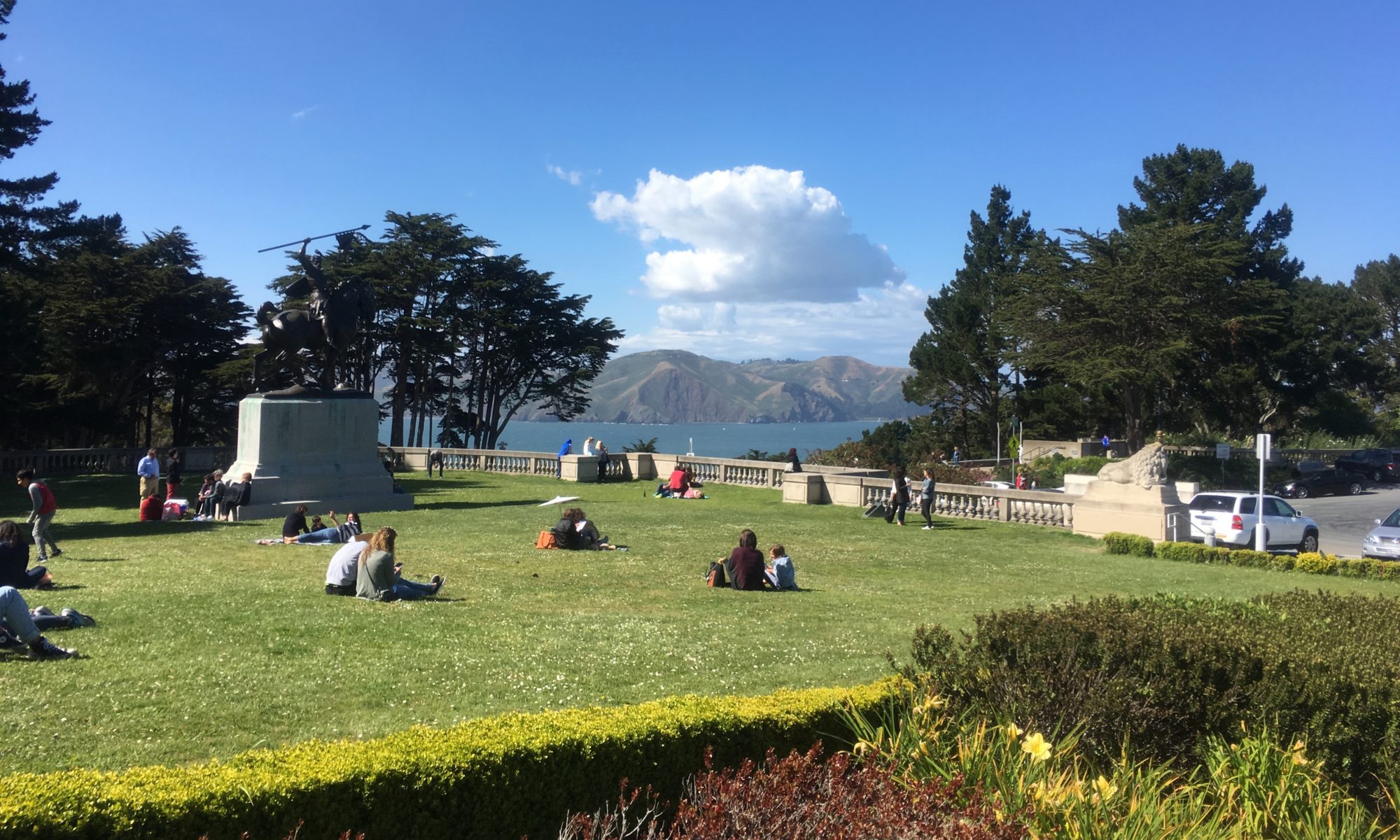
‘Dumpster fire’: In leaked email, S.F. Parks Alliance admits misusing at least $3.8 million

By Michael Barba, Accountability & Public Safety Reporter :
sfchronicle -excerpt (audio)


The San Francisco Parks Alliance, a major nonprofit with a long history of beautifying the city’s beloved public spaces, diverted at least $3.8 million earmarked for specific projects to cover its operating expenses as the charity rapidly imploded, the Chronicle has learned.

The stunning admission comes in an email sent Thursday by the nonprofit’s chair, Louise Mozingo, to one of its donors, in which the official described the financial crisis facing the Parks Alliance as “what a friend of mine would call a dumpster fire.”…

The revelations are spurring some of those impacted to call for a criminal investigation. One official on Tuesday called for a hearing at City Hall, and a number of the nonprofit’s partners have come together to try to save it.

The Parks Alliance has been viewed as a crucial supporter and fundraiser for everything from new parks to trail maintenance, gardening projects and habitat restoration in San Francisco. It has also hosted well-attended events, such as outdoor movie screenings, until recently. …

However, the Parks Alliance told Baker Street that its $3.8 million deficit in restricted funds that were used for other purposes includes “approximately $1.9M of Baker Street Foundation money for the Crane Cove project.”

“I think law enforcement should be involved,” Nicola Miner said in an interview Friday. “I think we’re past the point of this was some kind of mismanagement. $2 million that was supposed to go to the people of San Francisco is $2 million, that’s a lot of money.”

The district attorney’s office declined to say whether it is investigating.

The Parks Alliance, while helping funnel private dollars to city projects, also acts like a bank for more than 80 smaller neighborhood organizations around San Francisco seeking to raise money from donors. As a result, these groups don’t need to obtain nonprofit status on their own or hire financial staff to manage their books….

The nonprofit was said to owe an estimated $4.6 million, including $1.7 million to partners and service providers — the latter of which Mozingo described as largely small businesses. The organization owes an additional $1.3 million to $1.7 million to the city parks department for “executed projects” and $1.2 million for a bank loan.

As of Monday, the email said, the nonprofit had just $1.6 million in assets, with $1.2 million in cash….(more)

How much of Parks Alliance money was spent on PR and the Prop K campaign? Remember all those signs and graphics that were sprouting up touting the Great Parkway? Guess they will not be financing any of the anti-recall campaign.

Does building homes lead to lower housing costs? New research is roiling the debate

By : sfchronicle – excerpt (audio)

The new paper argues other factors besides development restrictions are behind rising home prices.

Perhaps the most contentious debate surrounding the Bay Area’s housing affordability crisis is whether building market-rate homes restrains rising costs.

Most housing researchers say it does. Increasing the number of homes, they argue, means homeowners and renters have more options to choose from, forcing sellers and landlords to moderate their prices. Those findings have galvanized pro-housing advocates and California lawmakers who are pushing to make home building easier. San Francisco Mayor Daniel Lurie, for example, has proposed allowing taller buildings along transit corridors in less dense neighborhoods.

But a new paper from researchers at the University of California and the Federal Reserve of San Francisco challenges that stance. It specifically calls out the Bay Area, saying that whatever the reason is that homes are so much more expensive here than those in Houston, it’s not because it’s easier to build in Texas…

The paper measured changes in housing units, home values and for-sale house prices from 1980 to 2020 across U.S. metropolitan areas. The authors then compared the trends between places where housing is harder to build — whether because of policies or geographic constraints — and areas where it’s easier to build…

Vancouver-based economist Michael Wiebe made a similar critique, and also argued that looking at constraints at the metropolitan level could obscure potential connections between total income and building challenges. The report’s authors, who declined to speak on the record, responded to his critique in a follow-up paper. An additional analysis, they said, showed those connections aren’t strong enough to affect the results… (more)

NO DAY AT THE ZOO

Via sfstandard email…

There’s nothing better than two controversies crashing into one another. That’s what happened late last month after the San Francisco Zoo director quietly suggested the closure of Upper Great Highway, now called Sunset Dunes, was screwing them over. 

In an April 25 memo, SF Zoo CEO Tanya Peterson said the highway’s closure had caused decreased attendance, impacted staff and volunteer commutes, and confused drivers in the area. The note was meant to be internal, Peterson later said, but it wound up in the hands of the campaign to recall Supervisor Joel Engardio, which blasted it out to supporters.

Asked for comment Friday, Peterson added that other factors may have impacted attendance, such as Sunset Dunes protesters and competing Easter weekend events. Then things got interesting.

By Saturday, the zoo director had issued an entirely new statement calling the April memo “premature” and saying she was “thrilled to witness the beautiful opening of Sunset Dunes and see first-hand how important parks are to our community.”

In the background was PR guru Sam Singer, whose firm represents both the Stand with Joel campaign and the San Francisco Zoo, which has had its share of bad press over the years. In a phone call, Singer said it was a “matter of fact” that protesters had caused traffic disruptions during Sunset Dunes’ opening weekend. Sunset United Neighbors, a neighborhood group that endorsed the recall and shared Peterson’s initial memo with members, issued a clarification Saturday.

Asked whether his relationship with both the zoo and the anti-recall campaign presented a conflict of interest, Singer acknowledged the optics but said the recall camp “politically damaged themselves” by blasting out the memo prematurely. On Sunday, Peterson issued yet another statement: “While we appreciate Mr. Singer’s long-standing relationship with SF Zoo, we amended our analysis independently. We look forward to working with everyone to enhance our Zoo and our community…

Conflicts are growing as the opponents dig in their heels for the next round. The Zoo is finding itself in the place that the SF Museums have already gone, as the anti-car people continue to cut their businesses. Parks are free. Museums and Zoos count on paying customers to survive. Those seeking free fun do not intent to pay for anything. PR professionals should know better than to wear too many hats at one time. It is getting harder for city agencies and departments to keep from stepping on each other’s toes, especially during budget cutting season. PR might be considered a bit of an extravagance.


Here’s a map of where SFPD officers work private security side gigs

by JOE RIVANO BARROS and KELLY WALDRON  : missionlocal – excerpt (map)

FPD says its officers working as security guards are ‘out in the community.’ But mostly, they’re downtown.

When Supervisor Jackie Fielder and Assistant Chief David Lazar sparred at a San Francisco city hearing this week, two questions arose: Is it good for public safety that the city’s police officers can go work private security after work, and are those officers spread out equitably across San Francisco’s neighborhoods?

Lazar said yes, full stop. The program “is a big win for the community, the public, the city, and for the department,” he said. Allowing SFPD to act as a broker for off-duty police officers is a way to have police ”visible in public” and “out in the community” reducing crime — but with private businesses paying the tab. It’s a great program that needs to continue, he said. SFPD should actually look to expand it.

Fielder countered. The program — known as 10(b) — gives certain parts of the city a stronger police presence, she said, based on the ability of local businesses to pay for it. The police department “should be equitably allocating public safety resources, including officers” where they’re most needed, without an option to buy your way into city-trained and subsidized security…

10(b) program underlies SFPD’s overtime abuse  Concern over geographic equity is not the only criticism of the 10(b) program. It’s now at the center of uproar over overtime misconduct within the San Francisco Police Department.

At the city hearing this week, six supervisors lambasted police brass for asking for another $61 million in overtime for the year… (more)

Instead of cutting back on police education, the academy ought to set up a less intense program to train security guards. Academy students may even work their way through the police program by gettin their start as security guards. That would solve two problems at one time and get a lot more people on the street faster.

Dozens of Mission homes could gain historic preservation protections

By Keith Menconi : sfexaminer – excerpt

Two miniature neighborhoods in the Mission district could soon gain historical-preservation protections.

A committee of San Francisco’s Board of Supervisors advanced a pair of resolutions Monday marking the first step in a legal process that could eventually result in the residential areas — which together comprise 53 properties — receiving official historical-landmark designations.

Monday’s resolution, sponsored by Board President Rafael Mandelman, is part of a decades-long campaign to preserve buildings within the Mission Dolores neighborhood, the historical core of the broader Mission district with roots tracing all the way back to the 18th-century Spanish settlement that sprung up around the still-standing Mission Dolores adobe chapel that now gives the neighborhood its name.

Two miniature neighborhoods in the Mission district could soon gain historical-preservation protections.

A committee of San Francisco’s Board of Supervisors advanced a pair of resolutions Monday marking the first step in a legal process that could eventually result in the residential areas — which together comprise 53 properties — receiving official historical-landmark designations.

Monday’s resolution, sponsored by Board President Rafael Mandelman, is part of a decades-long campaign to preserve buildings within the Mission Dolores neighborhood, the historical core of the broader Mission district with roots tracing all the way back to the 18th-century Spanish settlement that sprung up around the still-standing Mission Dolores adobe chapel that now gives the neighborhood its name…

If the full board approves Mandelman’s resolution, it will trigger further rounds of public review by San Francisco’s Historic Preservation Commission. Final approval of the designations will still require another sign off from the Board of Supervisors as well as the mayor.

The two districts would join a roster of other highly recognizable historic districts in San Francisco, including Alamo Square, Civic Center and Dogpatch.

In recent years, local preservationists have redoubled their efforts to add historical protections to San Francisco buildings in response to a raft of housing legislation aimed at spurring widespread development in the coming years.

During his remarks Monday, Mandelman echoed their fear that unchecked construction could lead to demolitions that would erase San Francisco’s history from the cityscape.

“The reality is that healthy cities do change and grow,” Mandelman said, “but as we prepare for that growth and that change, I think it is especially important that we take steps to preserve our architectural heritage.”… (more)

S.F. city departments are billing each other millions as city faces down massive deficit

by XUEER LU : missionlocal – excerpt

San Francisco city departments are leaving tens of millions of dollars in unspent — and, oftentimes, unaccountable — funds every year after billing one another for services, according to a new city report published Monday.

The report suggests that, at a time when San Francisco is facing an $818 million deficit, basic fiscal transparency measures are still not the norm across a city with a $16 billion budget.
“At a time when the Mayor is proposing drastic cuts to our most critical social services, and trust in government is fragile, the City must hold itself to the highest standards of accountability,” wrote Supervisor Jackie Fielder, who is pressing for a hearing on the report from the San Francisco Budget and Legislative Analyst.
 
The report revealed that since 2018 city departments have left between $53 million to $80 million in unspent “work orders.” Certain departments routinely bill others for their services: The Public Utilities Commission, for instance, might pay the Department of Public Works for installing new sewer lines, and the City Attorney’s Office might bill departments for legal services
The Budget and Legislative Analyst looked into three departments: the Controller’s Office, which greenlights any such billings, the City Attorney’s Office and the Department of Public Works —  two departments that offer services to other arms of the city.
It also looked into the Mayor’s Budget Office, which holds conversations with all city departments regarding their budget proposals.
Some other key findings from the report are:
  • Departments, such as the City Attorney’s Office, routinely bill for services months after the work is done.
  • Public Works frequently fails to provide detailed breakdowns of how much it will cost departments to maintain their facilities, making it hard to track funds.
  • There is no documented and standardized process to review interdepartmental expenditures, causing inconsistency and inefficiency across all departments.
  • City departments are skirting Board of Supervisors’ oversight by funneling funds for their positions through other departments.

The report is now heading to the Government Audit and Oversight Committee. Supervisor Fielder, who chairs the committee, is hoping for a hearing, which is a common next step for any audit released by the Budget and Legislative Analyst.  Fielder’s legislative aide Preston Kilgore, for his part, underscored the report’s timeliness: Mayor Daniel Lurie is required to present his initial budget on June 1…(more)

Comments welcome  at the source.

RELATED:

Weird accounting could free up millions of dollars for next SF budget


Notice Ordinance Passed

via email from Neighborhoods United SF

This week, the Board of Supervisors approved long-overdue legislation requiring direct notice to residents and businesses when their property, or one within 300 feet, is proposed for upzoning, specifically increases in height and/or density.

The measure passed with an 8–3 supermajority!

We are especially grateful to Supervisor Chan (D1) for championing this effort, and to the Supervisors who stood with her for transparency and the public’s right to know: Sherrill (D2), Sauter (D3), Engardio (D4), Mandelman (D8), Fielder (D9), Walton (D10), and Chen (D11).

Unfortunately, Supervisors Mahmood (D5), Dorsey (D6), and Melgar (D7) opposed the measure, citing concerns that transparency could “scare residents.” This is deeply troubling—especially given that more than 400,000 homes and businesses could be impacted by sweeping zoning changes. A simple notification should not be controversial.

We urge every Supervisors to host public town halls and explain this permanent shift in land use policy to their constituents. We remain hopeful Supervisors will respond to the growing demand for common sense, fairness, and community involvement as these changes move forward.

If you have time write a letter of thanks to the supervisors who support notice and transparency.


ABUNDANCE MEETS RESISTANCE: ARE DEMOCRATS FINALLY READY TO GO ALL IN ON BUILDING HOUSING?

By JEANNE KUANG : calmatters – excerpt

Amid a post-2024 wave of Democratic interest in the burgeoning pro-development “abundance” movement, this seemed to be an easy year for California’s yes-in-my-backyard housing development activists.
Democratic leaders in the state Legislature declared their intention to tackle affordability this year. Gov. Gavin Newsom and other politicians have since embraced the “abundance” platform, which argues that Democrats must do more to quickly deliver housing, transportation and other infrastructure projects to their constituents.
Lawmakers have introduced ambitious bills that would, for housing developments in existing neighborhoods, blow a hole through the longstanding thicket of environmental reviews and regulations that often slow down projects and add costs. One of those passed its first committee on Monday.
Still, YIMBY-ism hit a stumbling block Tuesday in the form of the Senate housing committee. The committee, led by Sen. Aisha Wahab, nearly killed a closely watched bill to require cities to allow taller, denser apartments and condo construction near public transit stations.
Wahab said she was acting on a chorus of familiar objections from progressives and others who have long delayed housing construction in California: The legislation didn’t guarantee that projects would be built with union labor. It didn’t require that the new units be affordable for low-income residents. It could infringe on local governments’ ability to block or green-light projects. It opened up the possibility of bypassing certain environmental reviews.
In the end, the committee voted 6-2 against Wahab’s objections to narrowly advance Senate Bill 79, by Sen. Scott Wiener, a San Francisco Democrat and prominent advocate for housing production. Some Democrats were absent or didn’t vote. The committee also killed a different Wiener bill that would have further loosened restrictions on property owners who want to split single-family homes into duplexes. It was a stark reversal from prior years in the Legislature, when Wiener chaired the housing committee and pushed through several bills to spur housing production…
A progressive who is focused on preserving explicitly affordable units for low-income tenants, Wahab, a Hayward Democrat, was pushing for legislation to help cities that enact rent caps compete with other municipalities for state housing and planning grants. Some studies have found rent control in San Francisco has reduced rental supply, while other economists say capping rents is still needed to help those who are housing insecure.
“The state has prioritized development, development, development,” Wahab said. “The types of development that are going up with zero parking and all these giveaways to developers have also not translated to housing that has dignity that people want to stay in and raise their families in.”
Her bill (SB 262) drew skepticism from some colleagues on the committee, who noted the state funding programs are for development and production, but nevertheless voted to advance it… (more)

SB 262: Housing element: prohousing designations: prohousing local policies. https://calmatters.digitaldemocracy.org/bills/ca_202520260sb262

Supes approve public notice for neighborhood zoning changes

By Tim Redmond : 48hills – excerpt

Chan bill approved; Dorsey, Melgar, however, say the city should not ‘alarm’ people by telling them what’s about to happen to their communities.

The Board of Supes approved by a veto-proof majority today a bill that would require the Planning Department to notify tenants, businesses and property owners about the massive new zoning changes proposed for the West Side of town.

The 8-3 vote came after two supes, Matt Dorsey and Myrna Melgar, warned that notification would cause under alarm in the impacted neighborhoods.

Dorsey said the notices would be “incredibly alarming.” Melgar said the city would be “needlessly alarming” people…(more)

Wow! and Wow! Why would Matt Corey care since his site is already densified and up-zoning the West side will not affect his constituents.

I can see why Melgar may be concerned because she is already on the bad side with many of her constituents, who will see major changes in their neighborhoods as the development shift to them. Was she planning to hide the plan and spring it on them after it is too late? Of course the are alarmed. They are more than alarmed. They are angry and she knows it.

SF upzoning could displace small businesses, advocates warn

By Keith Menconi : sfexaminer – excerpt (audio)

A new front is opening up in the brewing political battle over San Francisco’s still-in-progress plan to upzone large swaths of the west and north of The City.

A coalition of local businesses and progressive advocates is raising the alarm about the possibility that widespread upzoning could result in a large number of mom-and-pop shops getting displaced as looser zoning rules unlock a wave of new residential construction projects.

Such projects often force small businesses to relocate for lengthy periods to make way for demolition or remodeling work, they contend.

“As commercial corridors are upzoned and the value of buildings and parcels in these corridors increase as a result, we anticipate a substantial increase in landlords using these tactics to push long-term community-serving businesses out,” said Justin Dolezal, a co-founder of local advocacy group Small Business Forward.

For the most part, small businesses in San Francisco do not own their own buildings, according to the group. That leaves local establishments — including bars, restaurants, retailers, and nail salons — highly vulnerable when landlords decide to increase rents or simply choose not to renew lease agreements.

Dolezal’s group is making the case that as city leaders consider adopting a new zoning map that would increase height and density limits along dozens of commercial corridors, The City should first put stronger safeguards in place to protect the thousands of small businesses dotting San Francisco’s cityscape.

Local small-business advocates turned out in large numbers during last Thursday’s meeting of the Planning Commission to present their list of proposals, including additional requirements that developers provide financial support to small businesses displaced as a result of building demolitions.

In making the case for such safeguards, they described such small businesses as beloved local institutions that serve as valuable engines of commerce as well as highly prized communal hubs for the neighborhoods they serve… (more)