ONV Volunteers at the League of California Cities Conference Anaheim, September 23, 2026
In 2024, Our Neighborhood Voices, a 501(c)(4) campaign committee, welcomed the formation of a 501(c)(3) sister organization, Our Neighborhood Voices Education. The sister organization was created to illuminate the issues and empower the public and city governments regarding their rights and possible solutions regarding local control. It has built a statewide following and a network of local activist groups. Together, these groups increased public and local-government awareness of the issues and possible solutions, culminating in Friday’s vote of 253 California cities.
Gary McCoy, left, and Michael Trung Nguyen are the Bay Area Reporter’s first and second choices, respectively, in the race for District 8 supervisor.
Establishing a historic district in the heart of San Francisco’s LGBTQ Castro neighborhood may not have as enthusiastic a supporter of it once gay District 8 Supervisor Rafael Mandelman leaves office in January. Of the four candidates seeking to succeed him at City Hall, just one has come out in full support of the creation of the historic district.
Gay Twin Peaks resident Michael Trung Nguyen, a patent attorney also known as drag queen Juicy Liu, told the Bay Area Reporter “absolutely, absolutely” when asked if he would support the designation for the Castro. As the B.A.R. was first to report last week, Mandelman introduced a resolution September 22 to initiate the process to incorporate the 400 and 500 blocks of Castro Street and several blocks on adjoining streets into a Eureka Valley Commercial & Castro Village LGBTQ+ Historic District.
It must first move out of the supervisors’ land use committee then be brought up for a full vote at the board before taken up by the city’s historic preservation and planning commissions. Once those oversight bodies weigh in, then an ordinance to officially establish the historic district will need to be introduced at the board and be approved by the supervisors.
With just three months left to get anything adopted by the board this year, it is likely it will fall to Mandelman’s successor to designate the 93 parcels identified by planning officials as part of the city’s 15th historic district. It would be the first centered around an underserved community… (more)
Tenants and anti-displacement organizations want San Francisco to use funds from an existing real estate transfer tax to develop mixed-income social housing and provide rent relief.
Amid skyrocketing rents, a flood of evictions and an additional $25.1 billion needed to reach San Francisco’s state-set affordable housing production goals by 2031, Proposition I has sparked fierce debate.
One of several housing-related measures on the ballot this November, the Affordable Housing Guarantee Act — which could dedicate an estimated $120 million annually toward affordable housing — could create hundreds of units a year in mixed-income developments and bolster displacement prevention services. Evictions are at an 11-year high, prompting Mayor Daniel Lurie to declare a rent emergency.
“With rent skyrocketing 30-plus percent, our city needs to do better,” Christin Evans, co-founder of Small Business Forward, said to cheers at an Aug. 16 rally celebrating the measure. “With 100 million per year in revenue that’s expected from this measure, we can take more housing off the speculative real estate market, build more affordable housing and keep tenants in their homes.”
Proposition I would redirect money from a transfer tax on the sale of properties, dedicating revenue from sales valued at more than $10 million to a new House SF Fund. Currently, revenue from the tax on these sales goes into the city’s general fund, where it can be spent more freely.
The measure would not raise taxes and includes a tax break for new multifamily developments but Lurie calls it an “unaccountable slush fund” — even though the Mayor’s Office of Housing and Community Development would control the money the tax generates. Supporters of the measure, who include affordable housing advocates and tenants rights groups, said they put it on the ballot because elected leaders have been ignoring the will of the people since 2020, when voters increased the real estate transfer tax on high-value sales and approved an ordinance allowing the city to buy and/or develop up to 10,000 units of low-income rental housing… (more)
The mayor’s proposed reforms include six ordinances and more than $30 million in investments, and addresses three areas fueling the rent emergency: protections from unwarranted evictions and “sudden rent spikes” while beefing up the city’s enforcement of tenant rights.
Lurie did not announce any immediate action and it’s unclear when renters in the city can expect any tangible relief as the median rent in San Francisco has risen over 25% in the last year.
The incredible increase in prices has allowed some landlords to take advantage of the booming economy by driving rents up to “astronomical” levels, according to City Attorney David Chiu. The city is now asking renters to report any wrongdoing to the city attorney’s office….
While local and state law limit some rent increases, there are numerous carve-outs to those laws that leave many San Francisco renters at risk of unlimited rent increases. Some tenants have seen rent increases as high as 90% during this latest housing crisis…
The mayor’s most progressive effort is to reaffirm his support for District 9 Supervisor Jackie Fielder’s proposed legislation to prevent evictions that are issued for less than a month’s worth of unpaid rent.
Introduced this month, the law would bar a landlord from evicting a tenant for nonpayment unless they’re owed at least one month of the fair market rent…(more)
Still no mention of the numerous unfilled housing units that exist in the city today. Seems like that filling those should one a priority. Read the rest of the article to see more suggestions by other supervisors.
For nearly 20 years, the corner building at 18th and Mission has sat empty — and derelict. Not much remains of the structure, which was modernized in the 1930s with a sleek curved front, neon clock and large windows and that once housed the largest stove store on the West Coast. It has become a canvas for graffiti, wheatpasted advertisements and the backdrop for street vendors.
Then, in 2017, it became a symbol of some small hope: 63 below-market-rate condos for teachers were to be built on the lot, part of a push to make living in San Francisco affordable.
That project is now on hiatus. More than a year ago, after nearly a decade of trying, the city quietly hit pause on the Mission Economic Development Agency’s plans to build teacher housing. The city cited a lack of both funds and a feasible financing plan, according to emails obtained by Mission Local… (more)
Obviously SF priorities are elsewhere. The city has limited fund and they are less concerned with this project than they are with supporting the highly contested SFMTA and Rec and Park projects.
Housing, transit and parks are all in the same pot of fundable projects that seem ripe for turning into slush funds.
The former Pacific Rod and Gun Club property at Lake Merced before remediation. Decades of skeet and trap shooting left the site contaminated with lead shot and debris from clay targets.
San Francisco is moving ahead with plans to transform the former Pacific Rod and Gun Club site at Lake Merced into a new recreational destination — and is looking for an outside organization to develop and operate it.
The Recreation and Park Department on Friday, August 21, issued a Request for Proposals seeking organizations to lease, develop and operate all or part of the Lake Merced West property for recreational use.
The approximately 9.5-acre property at 520 John Muir Drive could be leased for as long as 20 years, according to information provided by Neal Patel, manager of Rec and Park’s Property Management Division.
The solicitation marks a significant step toward determining the future of a large piece of publicly owned waterfront property — and is likely to intensify a debate already underway among Lake Merced residents.
At a July 29 community meeting at the Lake Merced Boathouse, nearly 50 residents gathered to discuss the site’s future. Some objected to putting public park property under long-term outside operation, while others questioned why San Francisco should develop another recreational complex when an existing city-owned boathouse sits about a mile away.
A 20-Year Lease on Public Land
According to Rec and Park, the City is seeking proposals that would provide opportunities for public recreation, take advantage of the lakeside setting, increase public enjoyment and appreciation of the Lake Merced watershed and maintain water quality.
The department is also inviting community nonprofit organizations interested in operating or programming the site — including organizations considering partnerships with other entities — to submit letters of interest by September 24.
A pre-submittal meeting is scheduled for September 3, followed by site visits September 9 and September 22. Questions about the RFP are due November 20, and final proposals are due December 17.
City Disputes ‘Public-Private Partnership’ Label
The role of private interests emerged as one of the most contentious issues at the July community meeting.
Residents warned that long-term private control of public park property can be difficult to reverse. One participant pointed to the controversial Ferris wheel in Golden Gate Park as a cautionary example of a private attraction remaining on public parkland longer than some residents expected.
Rec and Park, however, has pushed back against characterizing Lake Merced West as a finalized public-private partnership.
Sarah Madland of the Recreation and Park Department said in an August 18 email that the project has not been finalized into a specific legal structure.
The distinction may prove important as the City evaluates proposals. The RFP nevertheless contemplates an outside organization leasing, developing and operating publicly owned land for as long as two decades.
88,000 Tons of Contaminated Material Removed
The property comes with an unusual environmental history…
A New Complex — One Mile From the Old One
The existing Lake Merced Boathouse, about a mile from the Lake Merced West property, already provides waterfront facilities, docks and space for recreational programs.
The Wiener Way Is getting a lot of pushback as people realize their rents are not going down as he promised they would. Question for our readers: Will the voters get the message that his way has not worked the way he claimed it would and quit supporting him?
Scott is pushing the towering plans for Marina Safeway.
Wiener’s housing laws are set up for cities and counties to fail, allowing developers to do almost anything they want, for many years to come Wiener’s housing laws are set up for cities and counties to fail, allowing developers to do almost anything they want, for many years to come August 26, 2026 By MICHAEL BARNES…(more)
The bizarre incompetence of Wiener’s SB 79 Do that math: This will never work. And it undermines all the twisted efforts cities are making to comply with RHNA September 22, 2025 By MICHAEL BARNES…(more)
By Lynn La via email from calmatters – see email for action items
With days to go until the end of the legislative session, lots of things are brewing at the state Capitol:
California Forever setback: Solano County supervisors voted against proposed legislation that would have allowed the billionaire-backed California Forever to speed up the creation of a new shipbuilding facility by exempting parts of it from environmental review. The vote threw a wrench in California Forever’s wider efforts to develop a new city and manufacturing hub in the county. Read more from Kate Wolffe and Yue Stella Yu.
Coastal carveouts: Newsom is pushing a plan that would give an environmental carveout to an oceanfront project belonging to Jeff Worthe, a Santa Monica developer who is also a donor to the governor. Environmental advocates are slamming the last-minute proposal and oppose any backdoor deals that sidestep a state law limiting development along the coast. Read more from Stella.
Cheaper GLP-1 drugs?: A bill that aims to lower the price of anti-obesity medications, or GLP-1 drugs like Ozempic, is one step closer to reaching the governor’s desk after clearing the Assembly earlier this week. If passed, the state would partner with a drug maker to produce cheaper GLP-1 drugs and distribute it through the state’s CalRx program. But it’s unclear how long this could take: California’s $55 insulin took three years to bring into market under CalRx. Read more from Ana B. Ibarra.
Meta to pay $17B — and limit ‘likes’ for teens — in social media settlement with states // CalMatters (free)
Taxing the rich cracks open the Democratic coalition // Politico (free)
Trump can’t cut off funding to communities whose policies he opposes, court rules // The Mercury News (gift link)
Nearly 300,000 K-12 students are homeless in CA, UCLA report says // EdSource(free)
Years late, billions over budget: CA’s high-speed rail hasn’t laid a track // The Wall Street Journal (gift link)
CA gas prices ‘shaping up to be the highest on record.’ What you’ll pay // The Sacramento Bee (paywall)
CA lawmakers sound alarm about urgent need for $2B for Olympics transportation // LAist (free)
SpaceX windfall presents dilemma for CA pension fund // Bloomberg (gift link)
By Angela Swartz, Freelance Writer :sfgate – excerpt
Beware Gifts that come with Conditions
The ‘whole idea of privatizing a public park is really nonsensical,’ protester says
Children blow bubbles and climb monkey bars on a typical foggy Thursday evening at Daly City’s Westlake Park. Just 100 feet away, in front of a pale yellow post-World War II building with a green awning, about 50 people clutch bright signs reading “No plastic park” and “Westlake Park is not for sale or lease.” Organizers, who are part of a group called Save Westlake Park, pass out neon-colored posters describing a “land grab” and flyers linking to a website with more information on their cause.
The Aug. 13 gathering at the park at 145 Lake Merced Blvd. brought together a new coalition of residents of the working-class suburb just south of San Francisco. They have banded together in hopes of halting a $10 million proposal to revamp Westlake Park. The Olympic Club, one of the oldest private athletic clubs in the world, has offered to make the changes — in exchange for some exclusive use of the field and facilities. … (more)
What is it about AstroTurf that YIMNYs like? This is becoming a national front to green grass trees. Who is behind this? We know who is paying for it, but why? And what role does Rec and Park pay in. this?
They cut down a tree, pour concrete or Astroturf and call it a park?
And then want the public to volunteer to maintain it?
Despite their attempts to remain in the shadows, the state’s roughly 200 billionaires have outed themselves. Greater visibility has meant their narrow — and self-interested — agenda has come increasingly under fire.
San Francisco billionaires like Michael Mortiz and Chris Larsen have a storied history of opposing increased taxes on corporations and the wealthy, using their fortunes to elect allies who will protect them from any incursion into their wealth.
Recently a labor-backed measure, the Billionaire Tax Act earned a place on November’s statewide ballot. The modest, one-time tax that, if passed, will fund essential services like public hospitals, has mobilized California’s elite who tried — and failed — to keep it off the ballot. Despite successes in smaller statewide races, and a few wins in recent San Francisco elections, the very fact that the Billionaire Tax earned a place on the ballot may be a sign that their winning streak is coming to an end.
The measure is popular. It should also be kept in mind that the tax on billionaires will not meaningfully affect their lives or reduce the obscene generational wealth. Nonetheless, billionaires are willing to spend millions to defeat it. This won’t endear them to the state’s voters. A coalition led by Google cofounder Sergey Brin has reserved $87 million of ad space for spots to combat the measure. That number will likely increase as the election approaches… (more)
When billionaires have such an appetite for spending ungodly amounts of money to buy elections one must consider why? The end goal cannot be more money since paying the taxes might be less painful than fighting them. What is worth more than the money? Buying a seat at the table where power lies.
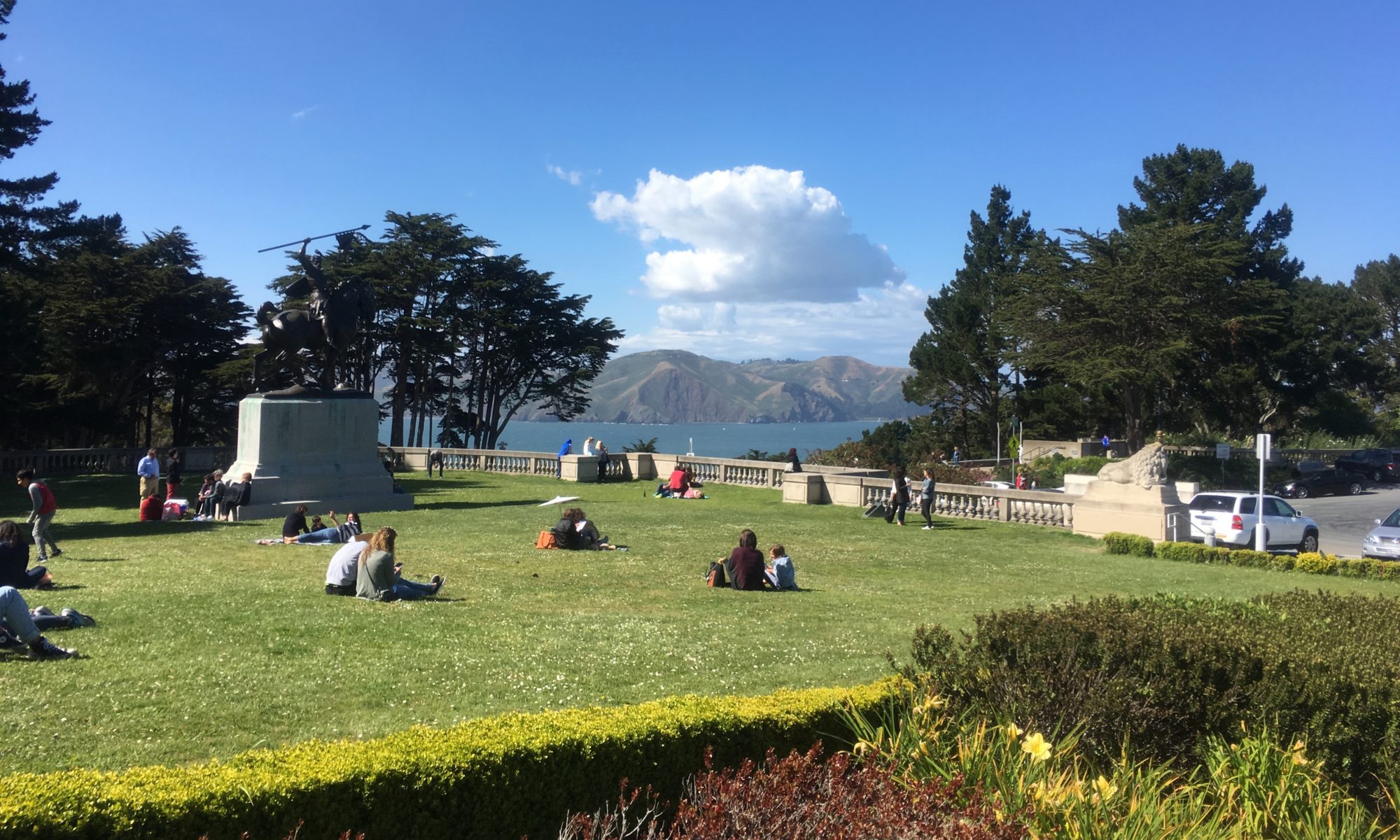


 The former Pacific Rod and Gun Club property at Lake Merced before remediation. Decades of skeet and trap shooting left the site contaminated with lead shot and debris from clay targets.


