City and Supervisor Engardio claim the project is a no go on San Francisco Beach. Petition against skyscraper in SF’s Sunset District draws over 2,500 signatures. Planning Department will hear the matter on July 26. One other issue that has been raised is over who is behind the caper.
By Joe Kukurta wrote in sfist, ” There are other things that smell funny about this proposal. CH Planning “project consultant” John Hickey, the wife of listed developer Raelynn Hickey, was convicted on securities fraud and mail fraud charges in 2006. Plus, YIMBY Law executive director Sonja Trauss has been doing a full-court press giving interviews on behalf of this project. That indicates this whole scheme may be a ruse to create Housing Element-related lawsuits, albeit lawsuits that could push the Overton window of San Francisco height limits up a little more. And that would benefit real estate developers pretty much across the board.… (more)”
Despite a massive budget deficit, California won’t cut funding for homelessness programs but sent a clear message to cities like San Francisco: Use it wisely, or else.
“People are dying in the streets in the name of compassion,” Gov. Gavin Newsom said at a press conference on Tuesday morning, a statement echoed by his Deputy Chief of Staff Jason Elliott later in the afternoon.
“At some point, the money can no longer be an excuse for inaction,” Elliott said. “We need to muster the political courage to match that investment.”
On Tuesday, the governor came through with his promise to keep funding the Homeless Housing, Assistance and Prevention Program, adding $1 billion to the pot after pausing funding late last year as a warning to cities to get serious about getting more people off the streets and into more permanent housing.
But the state doesn’t currently have the tools to do much more enforcement than that…
Though homelessness funding will remain intact, the governor announced $350 million in cuts to housing. Those cuts affect three homeownership programs that provide grants and loans to low- and moderate-income first-time homebuyers and support the production of Accessory Dwelling Units… (more)
By Dustin Garndiner : sfchronicle – excerpt (via email)
Ride-hailing company Lyft has poured more than $15 million into Proposition 30, which would raise the income tax rate for wealthy people and earmark the money for climate projects, including getting more people into electric cars.
Lyft’s involvement has divided Democrats who are otherwise aligned when it comes to fighting climate change. Environmentalists say the company is an important ally as the state struggles to meet its goals to phase out gas-powered cars, while Gov. Gavin Newsom and other opponents say it’s a self-interested ploy to get taxpayers to cover its cost to meet a state mandate to electrify its vehicle fleet.
There are two major downsides to capitalism. One, in capitalism there are winners and there are losers. And two, the end product of capitalism is an unlivable planet.
So their marketing wizards came up with a campaign that argued that lower income Californians who could not afford rooftop solar were subsidizing the rooftop solar of those who could – and who got rebates for returning energy to the grid. Gonzalez sponsored AB 1139, a bill that would have decreased the amount that people with rooftop solar would be paid for the energy they pump into the grid and increased the amount they would have been charged for monthly grid maintenance.(See analysis of donations to state lawmakers at the end of this story.).
But the idea hasn’t gone away. It’s just been moved to the five, unelected members of the California Public Utilities Commission...
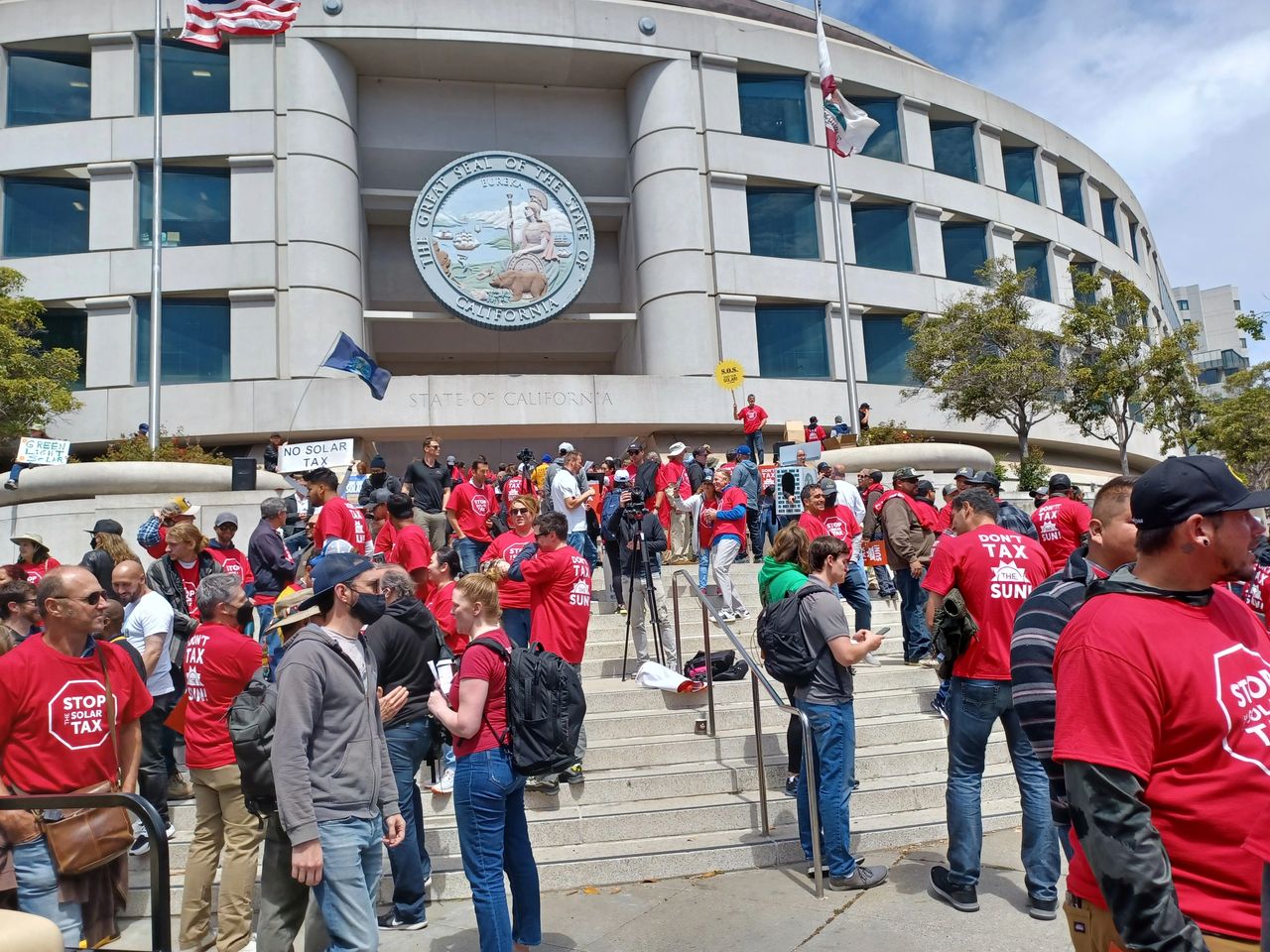
On Thursday, June 2, hundreds of rooftop solar installers, rooftop solar customers, environmentalists, and representatives of disadvantaged communities rallied at the CPUC buildings in San Francisco and Los Angeles to protest the newest proposals. The essence of their opposition? Reducing net metering rates (the rebates that go back to entities that pump electricity into the grid from rooftop solar) and raising grid maintenance rates would enrich these utilities at the expense of the planet. Crucially, these proposals would eliminate the financial incentives that homeowners now have to install rooftop solar. Opponents have called the proposals a tax on the sun. They also would have put about 2,000 solar companies out of business and eliminated around 70,000 jobs, according to the California Solar & Storage Association...(more)
Read the rest of the articles linked above for more details on the various players so you will know where to push the matter at the state level. Phil Ting supported AB1139. Call him to let him know where you stand and how likely you are to oppose his next run for office if he continues to support Big Energy companies efforts to kill solar.
In our case, we should also call and send letters to Senator Wiener and Assemblymembers Ting and Haney and any oher people in Sacramento you know. Phone calls to the CPUC directors are also encouraged. See some contact info here: https://discoveryink.wordpress.com/ca-legislative-process
By tyndicated Local – CBS San Francisco : msn – excerpt (includes video)
SAN FRANCISCO (KPIX 5) — Over the course of the pandemic, so-called “slow streets” popped up in neighborhoods throughout San Francisco. They’re designed to limit through traffic on some residential streets to create a common, shared space for those also traveling on foot and by bicycle.
There are nearly 30 corridors throughout the city, according to the San Francisco Municipal Transportation Agency (SFMTA).
But at Kirkham St. and 34th Ave., longtime local Elisa Smith thinks the slow street there is more of a nuisance than a benefit.
“The one here on Kirkham, it’s almost never used by anybody other than cars whizzing around the signage,” she said. “A lot of these are just causing more problems than they are a source of enjoyment for people.”…(more)
Surveys and polls are rigged everywhere. This is a non-partisan issue. Mayor Falconer is a Republican who follows the Democratic biker path down the road of lost political causes. California politicians have decided to link transportation and housing programs under a program that forces density and removes cars at a pace that most people object to. Sacramento created the war on cars and it is up to the voters to fight back, surrender, or leave. We shall soon see where the SF voters stand.
This one caught my eye as it appears to be relevant when accessing state bills that orride local control government authorities : The Local Fiscal Authority Principle : Home rule should guarantee local fiscal authority and recognize the value of fiscal stability at the local level. This principle accordingly includes local power to raise revenue and manage spending consistent with local budgets and priorities. To support local fiscal authority, a state should ensure adequate intergovernmental aid for general welfare at the local level and be prohibited from imposing unreasonable unfunded mandates.

 Assembly Districts areas shifted. Find out which you are in now.