What you Need to Know about SB 9 and SB 10 And Actions you may want to take

Presented by UnitedNeighbors.net
April 7, 5 PM – Zoom Townhall

https://zrants.files.wordpress.com/2021/03/pastedgraphic-1.png

Green space disappears as private yards are covered by more housing when Sacrament politicians support Builder Opportunity Bills such as SB9 and SB10. Find out more about the City’s new plans for our trees at the May 5 Land Use and Transportation Committee Meeting,

Guest Speakers Maria and Jeff Kalban United Neighbors explained SB9 and SB10 to us at our Land Use and Transportion Town Hall meetings  Apr 7, 2021 05:00 PM Pacific Time (US and Canada) video here: https://www.youtube.com/watch?v=c1q2ITxx470
Check out the latest updates on the bills here:
and here:

SFMTA Gives Updates on Subway, JFK, Transit Lanes

By Benjamin Schneider : sfweekly – excerpt

Major changes are headed for California, Lombard, and Park Presidio, while car-free JFK and the Great Highway are slated for extensive study.

How was your 4/20? Hopefully, you didn’t spend it the way the SFMTA Board of Directors did, in a meeting that stretched nearly to the 8-hour mark.

Of course, some things do require a great deal of planning, and this past Tuesday, the SFMTA staff provided the board with updates on transit service, presented plans for new transit-only lanes and “high occupancy vehicle” lanes on some of the city’s busiest streets, and provided a glimpse of their future plans…

Car-Free Streets

In recent weeks, there’s been a whole lot of drama surrounding the question of whether to keep JFK Drive in Golden Gate Park car-free in perpetuity. Supervisor Shamann Walton has described the car-free stretch of road as “recreational redlining,” making the park inaccessible to his Bayview-Hunters Point constituents arriving at the park by car. The De Young Museum has also been lobbying to bring cars back to JFK, arguing that it prevents visitors from accessing the museum. The nearby Academy of Sciences has been more equivocal, saying they support a “thoughtful planning process” before a decision is made on a permanent closure to cars.(more)

Not sure how much the people in San Francisco are willing to put up with, but it looks like SFMTA and SFCTA are going to continue to push drivers out of town, as they are doing all they can to close the streets to cars. Not sure how much longer the majority of the city voters will continue to support the financial demands of the those entities either, but, there is a plan to protest the closure of the Great Highway May 1 at noon. Corner of Lincoln and Great Highway.

If you can, and you care about the way the SFMTA and SFCTA have been managing the streets, you should show up with a personal sign that describes your case for re-opening the Great Highway and the many other streets that have been closed.
Petitions: https://www.discoveryink.net/wp/petitions/
Protests: https://www.discoveryink.net/wp/actions/

Proposal for streets to produce solar power

Today, solar panels are capable of supporting the weight of a car or truck weighing 250,000 lbs..  The panels can charge cars while driving and can keep roads free of snow in colder climates.  At a time when San Francisco’s  traffic is less than usual, this could be an ideal time to install some Solar Roadways as a pilot project.

New It’s Our Money podcast discusses public bank principles and how they’re being applied

via email from Public Banking Institute

Public banks of one form or another are emerging like Spring flowers. Across the USA a score of new public interest banking initiatives aim to fill service and credit voids that private finance won’t or can’t provide. Today we discuss three emerging applications of public bank principles: serving the substantial number of un- and underbanked people in California through the proposed new BankCAL program, creating a multi-trillion-dollar public infrastructure bank for the US, and clear evidence that public banks have excelled over private banks in responding to the global pandemic crisis. Our guests are Trinity Tran of the CA Public Bank Alliance, Alphecca Muttardy of the National Infrastructure Bank Coalition, and Thomas Marois, a leading expert on public banks globally.

[listen to the podcast]

A call for the state to revoke PG&E’s license to sell power

By Tom Molanphy : 48hills – excerpt
In the wake of more criminal charges, some say the PUC should end the private utility’s role as the main energy provider in Northern California (paving the way for public power).

The Sonoma County DA’s office filed criminal charges against PG&E this past week, the latest entry on the utility’s criminal rapsheet that seems longer than a California power line. PG&E stated that the company disagreed with the criminal charges and is “committed to making it right.”

The Reclaim Our Power grassroots organization responded with an emotional press conference Thursday, demanding that the California Public Utility Commission make things right by denying PG&E’s “safety certificate” on April 15th, a drastic step that would bring PG&E one step closer to having its entire business license revoked…(more)

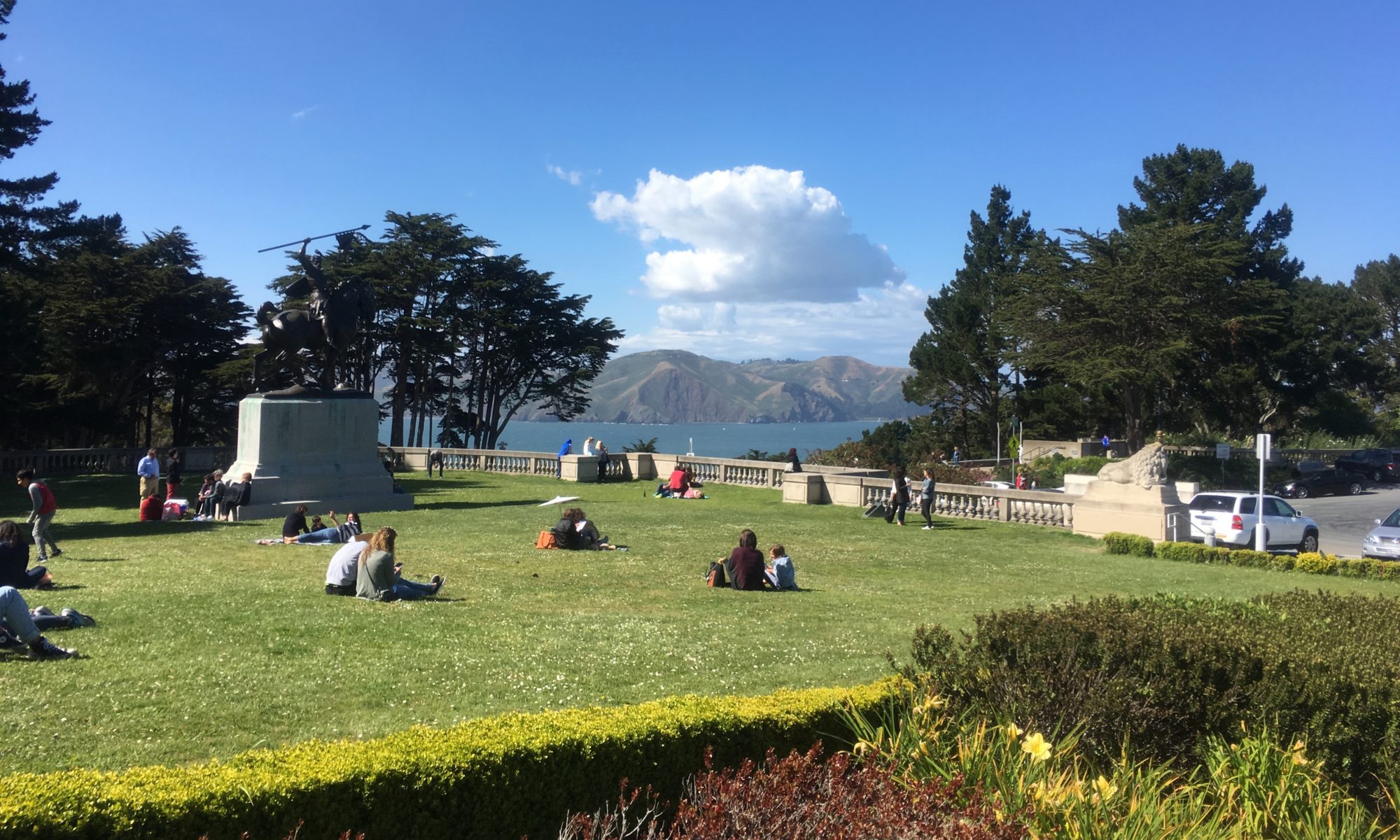
Golden Gate Park’s main drag has been closed to cars during the pandemic. The fight over its future is heating up

By Heather Knight : sfchronicle – excerpt

San Francisco’s leaders love arguing vociferously over pretty minor issues, but 54 years of fighting over how often cars should be restricted from one stretch of one road in one park must be some kind of record.

John F. Kennedy Drive in Golden Gate Park first went car-free — the eastern stretch of it, anyway — on Sundays in 1967. Supporters have wanted the closure expanded ever since and did get some Saturdays added to the mix, but they have repeatedly run into arguments from museum officials and others that a full closure would prevent people in cars from reaching their destinations.

Finally, the city closed JFK Drive to cars every day during the pandemic, a silver lining in a miserable year. In a city coping with dozens of traffic deaths annually and in a world facing a major climate crisis, keeping it that way permanently seems like a very tiny, very needed solution…
But the fight has taken a surprising and heated turn with Supervisors Shamann Walton and Ahsha Safaí recently tweeting simultaneously that they want JFK Drive to reopen to vehicles now that the pandemic is subsiding. They argued that people of color can’t access the park because of the closure, and Walton, in an ensuing editorial, called car-free JFK Drive elitist, segregationist and an example of “recreational redlining.”…(more)
There are hundreds of miles of bike paths and pedestrians paths in the park where cars do not drive. The roads are for the cars. The park is a family place for groups to visit and cars are the way most groups travel, especially now, when hate crimes are prevalent.
People who do not drive should not design streets for cars. Their “calming efforts” are creating angry drivers and angry drivers are not safe drivers. They angry and confused. If there is an uptick in accidents, that is an indication that the pilot projects are flawed.
My personal rant for the week: When SFMTA gets around to figuring out how to run a Muni system that does not involve bunching 5 Muni 22’s along a 3rd street lightrail served street, we may expect them to start figuring out how to return service that they removed to serve the Chase Center.
Log in and comment or write a letter to the editor if you feel strongly about this. Or, call or comment on one of the many “live” meetings that will not doubt be reviewing this for a while. Not keeping up the Cancalendar lately, but, links to some of the meeting agendas are here: https://cancalendar.wordpress.com/agendas/

Community leaders line up to oppose attacks on DA Chesa Boudin

By Tim Redmond : 48hills – excerpt

Records show the recall effort is backed by Big Tech, Finance, and Real-Estate (and someone who says ‘VC Lives Matter.’)

The right-wing campaign to recall District Attorney Chesa Boudin is a long way from qualifying for the ballot, but a coalition of community leaders and activists is already organizing to oppose it.

They argue that this campaign is part of an emerging trend to attack progressives and their positions in the city at a time when the left has had tremendous electoral successes…(more)

It is surprising to see where the money is coming from big tech, finance and real estate industries since most complaints about crime on the streets are coming from frustrated citizens complaining about the lack of police support. This a complicated situation and perceptions will probably outweigh the facts regardless of how much money or support is applied to either side.

Farmworkers fight shaped California attorney general nominee

By Adam Beam AP : startribune – excerpt

SACRAMENTO, Calif. — In 1977, Cynthia Bonta was among 3,000 people who locked arms and tried in vain to prevent 400 riot police from evicting the mostly Asian tenants of a hotel near San Francisco’s Financial District so developers could build a parking garage.

More than four decades later, her son Rob Bonta stood near that spot — now an apartment building for low-income seniors — to hear the governor of California nominate him to become the first Filipino-American attorney general of the nation’s most populous state.

Rob Bonta is a considered a shoo-in for confirmation from the Legislature. His likely ascension to one of the most powerful law enforcement posts in the country comes after more than than 50 years of community activism by his parents.

Bonta was first elected to the Assembly in 2012 and quickly carved out a reputation as a criminal justice reformer. He has called for ending the death penalty and championed legislation that outlawed for-profit prisons and ended cash bail until it was overturned by voters in November.

His father, Warren Bonta, who is white and a native Californian, marched with Dr. Martin Luther King Jr. in Selma, Alabama. His mother, Cynthia, began her activism after coming to the U.S. in 1965 from her native Philippines on a scholarship.

Their son’s nomination is a galvanizing moment for the state’s Filipino community, a group that advocates say is often a forgotten segment of California’s Asian Americans and Pacific Islanders, who account for about 16% of the state’s nearly 40 million residents...(more)